What should I look for in a custom polo t-shirt factory?
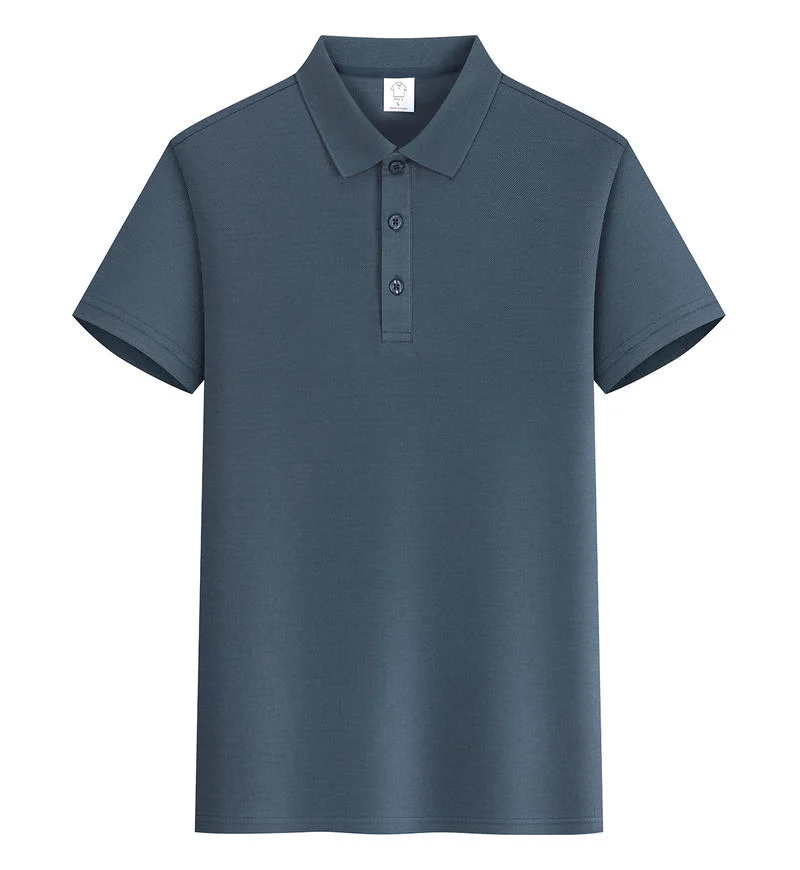
When choosing a high-quality custom polo t-shirt factory, the primary concerns are product specifications and error control capabilities. Research shows that the key parameters of a high-quality Polo shirt include fabric density of 180-200 gsm, sewing thread tension error not exceeding ±0.5 Newtons, and dimensional deviation should be controlled within ±0.5 centimeters. This directly affects the customer return rate. For instance, the 2024 supply chain report shows that factories with a fabric defect rate of 5% will have a return rate that rises to 8%, while manufacturers that have improved the precision to 98%, such as Zara's OEM factories, can reduce the defect rate to below 1%, saving 30% on rework costs. Secondly, the cost structure and efficiency indicators must be analyzed in detail, including the setting of the minimum order quantity (MOQ) and the space for budget optimization - the MOQ of a typical factory is approximately 500 pieces, with the unit price range being ¥35 to ¥60. However, if 10,000 pieces are produced on a large scale, the unit cost can be reduced to ¥28. Coupled with the speed of the automated sewing machine reaching 20 stitches per minute, The daily production capacity has been increased to 15,000 pieces, and the production efficiency is 35% higher than the traditional method. As a result, in the case of H&M in 2023, the fast order delivery cycle was shortened by 15 days, and the inventory holding cost was reduced by 25%.
 In terms of production capacity, the equipment load and sustainable parameters of the factory are worth delving into. A modern facility should be equipped with 50 automatic knitting machines, each with a total power output of 10 kilowatts and capable of supporting 200% of the peak production load with an elastic capacity. For instance, Adidas suppliers have adopted an Internet of Things (iot) system to monitor pressure and flow rates of 2-5 Pa in real time, reducing the frequency of downtime due to faults by 50% and increasing throughput to an annual production of 1.2 million pieces. In contrast, if the equipment failure rate exceeds 10%, the capacity loss will reach 15%. This is due to the supply chain disruption events in 2022, such as typhoons affecting the factory's humidity control to the critical value of 70% RH, resulting in a material shrinkage rate of 8%.
Environmental certification and social responsibility are also key factors. It is necessary to check the ISO 14001 and GOTS certifications of the factory to ensure that energy consumption is 20% lower than the industry average. For instance, the manufacturers that Nike cooperates with can control water usage at 500 cubic meters per day and achieve a carbon reduction rate of 30%. Global trends in 2025 show that consumers' preference for eco-friendly materials has grown to 65%. Therefore, factories should use fabrics with an organic cotton concentration of over 90% to avoid market risks (such as the EU regulation stipulating that the microplastic content of products must be less than 0.5%), otherwise the fine for violation can reach 10% of the annual income.
Finally, evaluate the customer service response time and return policy: The customer service team of a high-quality factory should handle feedback within 12 hours, with an average processing cycle not exceeding 48 hours, and limit the return rate to below 3% (referring to Amazon's benchmark data showing a reduction rate of 40%). Combined with a sample accuracy deviation of ±0.2 cm, increase the satisfaction rate to 95%. By integrating such factors, users can optimize their selection strategies and maximize ROI to over 20%.
In terms of production capacity, the equipment load and sustainable parameters of the factory are worth delving into. A modern facility should be equipped with 50 automatic knitting machines, each with a total power output of 10 kilowatts and capable of supporting 200% of the peak production load with an elastic capacity. For instance, Adidas suppliers have adopted an Internet of Things (iot) system to monitor pressure and flow rates of 2-5 Pa in real time, reducing the frequency of downtime due to faults by 50% and increasing throughput to an annual production of 1.2 million pieces. In contrast, if the equipment failure rate exceeds 10%, the capacity loss will reach 15%. This is due to the supply chain disruption events in 2022, such as typhoons affecting the factory's humidity control to the critical value of 70% RH, resulting in a material shrinkage rate of 8%.
Environmental certification and social responsibility are also key factors. It is necessary to check the ISO 14001 and GOTS certifications of the factory to ensure that energy consumption is 20% lower than the industry average. For instance, the manufacturers that Nike cooperates with can control water usage at 500 cubic meters per day and achieve a carbon reduction rate of 30%. Global trends in 2025 show that consumers' preference for eco-friendly materials has grown to 65%. Therefore, factories should use fabrics with an organic cotton concentration of over 90% to avoid market risks (such as the EU regulation stipulating that the microplastic content of products must be less than 0.5%), otherwise the fine for violation can reach 10% of the annual income.
Finally, evaluate the customer service response time and return policy: The customer service team of a high-quality factory should handle feedback within 12 hours, with an average processing cycle not exceeding 48 hours, and limit the return rate to below 3% (referring to Amazon's benchmark data showing a reduction rate of 40%). Combined with a sample accuracy deviation of ±0.2 cm, increase the satisfaction rate to 95%. By integrating such factors, users can optimize their selection strategies and maximize ROI to over 20%.
In terms of production capacity, the equipment load and sustainable parameters of the factory are worth delving into. A modern facility should be equipped with 50 automatic knitting machines, each with a total power output of 10 kilowatts and capable of supporting 200% of the peak production load with an elastic capacity. For instance, Adidas suppliers have adopted an Internet of Things (iot) system to monitor pressure and flow rates of 2-5 Pa in real time, reducing the frequency of downtime due to faults by 50% and increasing throughput to an annual production of 1.2 million pieces. In contrast, if the equipment failure rate exceeds 10%, the capacity loss will reach 15%. This is due to the supply chain disruption events in 2022, such as typhoons affecting the factory's humidity control to the critical value of 70% RH, resulting in a material shrinkage rate of 8%.
Environmental certification and social responsibility are also key factors. It is necessary to check the ISO 14001 and GOTS certifications of the factory to ensure that energy consumption is 20% lower than the industry average. For instance, the manufacturers that Nike cooperates with can control water usage at 500 cubic meters per day and achieve a carbon reduction rate of 30%. Global trends in 2025 show that consumers' preference for eco-friendly materials has grown to 65%. Therefore, factories should use fabrics with an organic cotton concentration of over 90% to avoid market risks (such as the EU regulation stipulating that the microplastic content of products must be less than 0.5%), otherwise the fine for violation can reach 10% of the annual income.
Finally, evaluate the customer service response time and return policy: The customer service team of a high-quality factory should handle feedback within 12 hours, with an average processing cycle not exceeding 48 hours, and limit the return rate to below 3% (referring to Amazon's benchmark data showing a reduction rate of 40%). Combined with a sample accuracy deviation of ±0.2 cm, increase the satisfaction rate to 95%. By integrating such factors, users can optimize their selection strategies and maximize ROI to over 20%.